
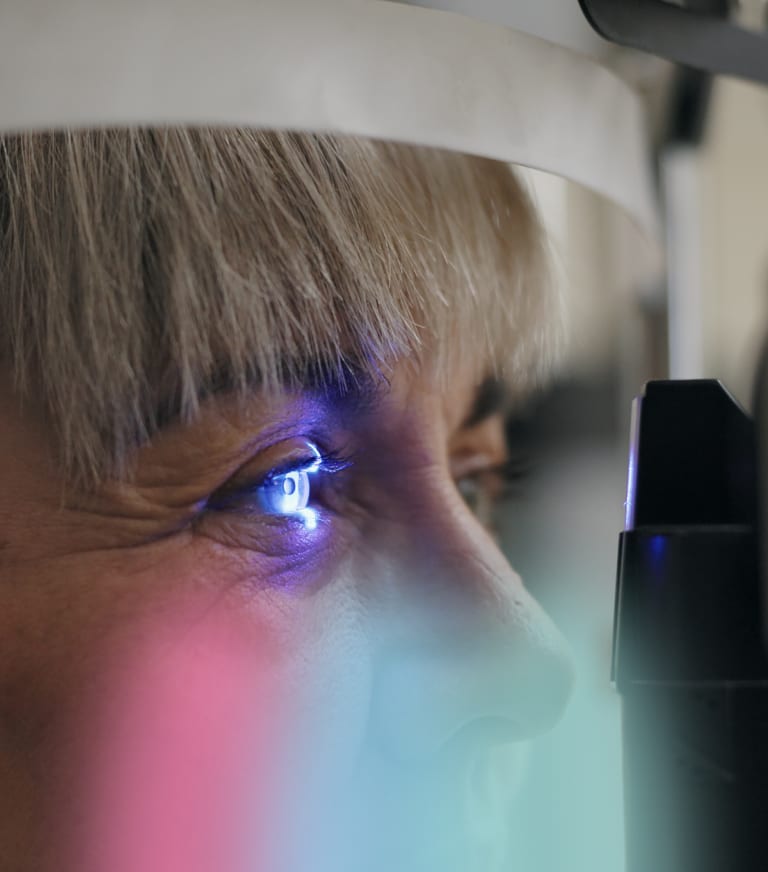

Glaucoma is sometimes referred to as the silent thief of sight because the disease often develops slowly and without symptoms. This means that damage caused by glaucoma can cause irreversible vision loss before you’re aware that you have the condition.
Routinely scheduling eye exams is the most effective way to screen for glaucoma and detect signs of the disease early to protect your sight. At Luminance Vision, we use diagnostic technology to enhance our ability to detect glaucoma during early stages.
If you’ve been diagnosed with glaucoma, we can help you monitor your eye health and manage your condition through personalized treatment options. To learn more, book your appointment today.
What Are the First Signs of Glaucoma?
The most common type of glaucoma, open-angle, is known to progress silently and painlessly, often going undetected without regular eye exams. The first indication of this type of glaucoma is peripheral vision loss.
However, other types of glaucoma may be accompanied by symptoms. Some signs and symptoms of angle-closure glaucoma, for example, include:
- Blurred vision
- The appearance of halos or colored rings around lights
- Pain and redness in the eye
Any time you experience a sudden or significant change to your vision, you should book a comprehensive eye exam to determine the cause.

Types of Glaucoma
Glaucoma is a group of conditions including several distinct types. Each type has its own cause and treatments, but all impact the optic nerve. Several types of glaucoma include:
- Primary Open-Angle Glaucoma is the most common form of glaucoma. It’s painless and develops slowly, making it difficult to detect without an eye exam. It occurs when the eyes’ drainage canals become clogged over time, causing a buildup of fluid and increased pressure inside the eye.
- Angle-Closure Glaucoma is less common than open-angle glaucoma, but can be more sudden and severe. It occurs when the drainage angle becomes partially or completely blocked, increasing intraocular pressure (IOP), or internal eye pressure. When angle-closure occurs suddenly (acutely), the condition is a medical emergency that requires immediate attention.
- Normal or Low-Tension Glaucoma occurs when the optic nerve is damaged, although the IOP stays within a normal range, often without an obvious cause. This type of glaucoma typically shows more visual field abnormalities, particularly those closer to the center of vision.
- Secondary Glaucoma refers to any glaucoma caused by an eye injury, disease, or medication. Blunt force trauma that causes bruising around the eye can be a cause of glaucoma. Conditions such as diabetes can also increase the risk of developing glaucoma.
How Is Glaucoma
Diagnosed?
We use a number of techniques to diagnose glaucoma and determine your future risk of developing it.
First, your personal and family health history can help us determine your risk for glaucoma. We’ll also discuss your current vision and identify any possible symptoms.
Then, we’ll use diagnostic tests to evaluate your eye health and screen for signs of glaucoma. One of these tests is called tonometry, which is used to check your IOP (intraocular pressure).
Another test we use is a visual field analyzer, which provides an objective measurement of your central and peripheral vision. Glaucoma typically affects your peripheral vision first, slowly and subtly, so it can go unnoticed. An objective measurement provides us with a baseline that we can compare to from one eye exam to the next.
Finally, we use retinal imaging (fundus photography) to capture an image of the inside of your eye. This image can help us detect any irregularities in the retina or optic nerve head. We may also use OCT scans to see the eye from another perspective, allowing us to check the health of the optic nerve more closely.
Treatment Options
for Glaucoma
The treatment options recommended to you will depend on the type of glaucoma you have and its severity. Some individuals may be able to control eye pressure with medicated eye drops, while others may find surgery more effective.
Our optometrists will work closely with you to determine the most effective treatment option. They’re here to answer any of your questions throughout the diagnosis and treatment process.
Medicated eye drops can help reduce pressure in the eye. Depending on each unique case, a single medication or a combination of medications might be recommended. The exact prescription will depend on the type, cause, and stage of the glaucoma, as well as tolerance to glaucoma medications.
Laser surgery for glaucoma is known as trabeculoplasty. A high-energy laser stimulates the trabecular meshwork (the structure that drains fluid from the eye) to help fluid drain more efficiently. The results can be temporary, so some patients need repeated treatments.
If medication and laser surgery aren’t successful, surgery known as a trabeculectomy can be another option. During this surgery, a drainage filtration flap is created in the sclera, the white of the eye. The drainage flap provides another way for fluid to drain, increasing drainage efficiency and reducing the pressure.
Drainage implants are another option to increase drainage efficiency and reduce IOP. A small implant is inserted into the eye to help drain fluid. This option is typically recommended for people with uncontrolled glaucoma.
Defend Against Glaucoma
with Eye Exams
Eye exams remain the most effective method to screen for glaucoma during its early and most treatable stages. By attending regular eye exams annually (or as recommended by your optometrist), you can take a proactive approach to your eye care. We will do the rest, monitoring and caring for your eye health to support your vision long-term.
Book your next eye exam in Lafayette with Luminance Vision. We look forward to seeing you!
Book AppointmentOur Services
Our Curated Eyewear Collection
Our Featured
Eyewear Lines









Browse Our Reviews
Visit Our Location in Lafayette
Our Address
Contact Information
- Phone: 925-900-8977
- Fax: 925-677-1118
- Email: emailus@luminancevision.com
Hours of Operation

luminancevision
Dry Eye Clinic, Expert Eyecare &
Eyewear Boutique

drmeifleming
Dr. Mei Fleming, OD
Dry Eye Doctor


About Us
Eye Care
Specialty Eye Care
Dry Eye Clinic
Eyewear Boutique
Luminance Vision Optometry
- 925-900-8977
- 925-677-1118
- emailus@luminancevision.com